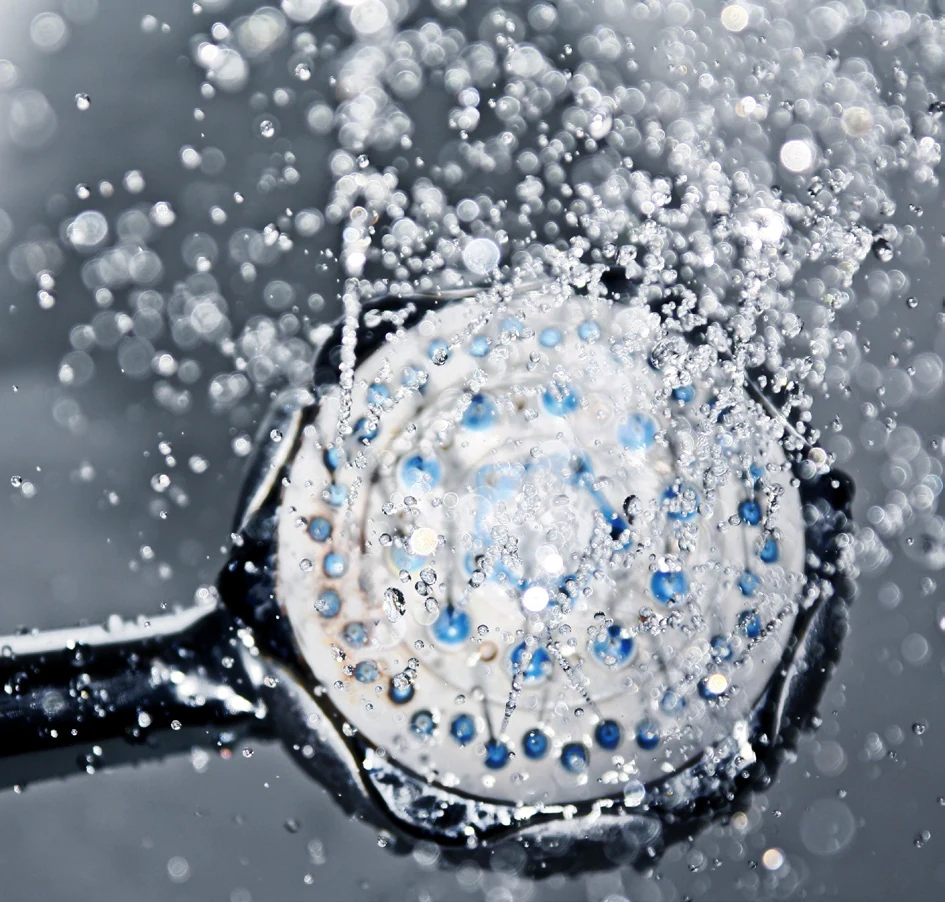
A shower filter and a water softener do different jobs. Hardness concerns involve calcium and magnesium; a shower-filter certification for chlorine reduction does not establish that it softens water. [5] [4]
White deposits and soap residue: ask about hardness.
Calcium and magnesium contribute to water hardness. Hard water can react with soap and leave deposits on household surfaces. [5] Ask for a hardness measurement and its units rather than assuming every mark in the bathroom has the same cause.
The hard-water and plumbing guide connects scale questions to fixtures. The softener page explains what to discuss about capacity, regeneration, salt and servicing.
What a shower-filter label actually tells you.
NSF describes NSF/ANSI 177 as a shower-filter standard covering a specific chlorine-reduction claim. It is not a general promise to remove all contaminants, soften the water or treat a skin condition. [4]
- What is the exact model and its independently verified claim?
- Does the claim match what I am trying to change?
- What flow, temperature and replacement limits apply?
- What happens when the cartridge reaches its service life?
- Is the concern limited to this shower or present elsewhere?
If hardness is the priority, compare that separately from chlorine reduction. For persistent skin or health concerns, seek appropriate medical advice; this guide does not diagnose them.
Why a smell may stand out when the shower runs.
Halifax Water explains that an earthy compound called geosmin can be more noticeable when water is heated. Check the supplier’s current information if your home uses its municipal supply. [13]
A sulphur-like smell needs a different investigation. Government guidance identifies possible sources in the well, plumbing or hot-water system. [15] Record whether it occurs with hot water, cold water or both, then use the odour checklist to prepare for a conversation. Do not assume a shower cartridge is the right answer.
Low flow or a dripping shower needs its own check.
Tell the provider if pressure has changed suddenly, only one fixture is affected, or water keeps dripping after shut-off. Those details belong in a plumbing or equipment assessment. A new filter does not repair a failed fixture.
The leak and plumbing guide helps separate repair questions from water-quality questions. If both are present, keep both on the list rather than buying one system to solve an undefined problem.
Bring a clear description to ECW.
For a Dartmouth, Halifax or other Nova Scotia home, note your water source, affected rooms and existing treatment. Ask what an ECW visit includes and whether further testing is needed. The team confirms service availability and the visit before you make a decision about equipment.
Quick questions
Does a shower filter automatically soften hard water?
No. Check its exact claim. A chlorine-reduction claim is different from reducing calcium and magnesium hardness.
Will water treatment cure dry skin or eczema?
ECW does not make that medical promise. Discuss water observations with the team and persistent skin concerns with a qualified health professional.
Can a softener repair a dripping shower?
No. A drip needs the appropriate plumbing assessment. Softening addresses measured hardness.